Each week, Food Tank is rounding up a few news stories that inspire excitement, infuriation, or curiosity.
Farm Workers Fear for Safety Amid Immigration Raids
As Immigration and Customs Enforcement (ICE) raids continue on farms, workers report feeling targeted, with one saying, “we are being hunted like animals.”
Federal agents recently conducted two large-scale raids on farms in Southern California and arrested at least 361 people, according to the Department of Homeland Security (DHS). The raids, and the protest that developed in response, resulted in the injury of at least 12 people, including eight who were hospitalized, and one farm worker’s death.
The action is thought to be the largest raid and the first death linked to the Trump administration’s immigration crackdown in California.
According to the Department of Homeland Security, agents also “rescued” 14 migrant children from suspected forced labor or trafficking. But they have released no additional information about the children, including their ages and what they were doing on the property.
The raids come amid shifting White House policies. President Trump initially paused farm raids in June, but ICE reversed the decision within days. After Trump said that migrant workers “vouched for” by farmers could remain in the country, Agriculture Secretary Brooke Rollins quickly clarified that there will be “no amnesty” for undocumented farmworkers. Rollins also suggested that Medicaid recipients can replace the current farm labor force and stated that increased automation will also play a role.
Nearly half of U.S. farmworkers are undocumented, according to U.S. Department of Agriculture data. But economists and agriculture experts continue to warn that welfare reform and automation cannot adequately fill the gap left by deportations. And advocates says that continued enforcement threatens agricultural stability and food security.
WWF Calls for Emergency Recovery Plan to Protect Africa’s Freshwater Species
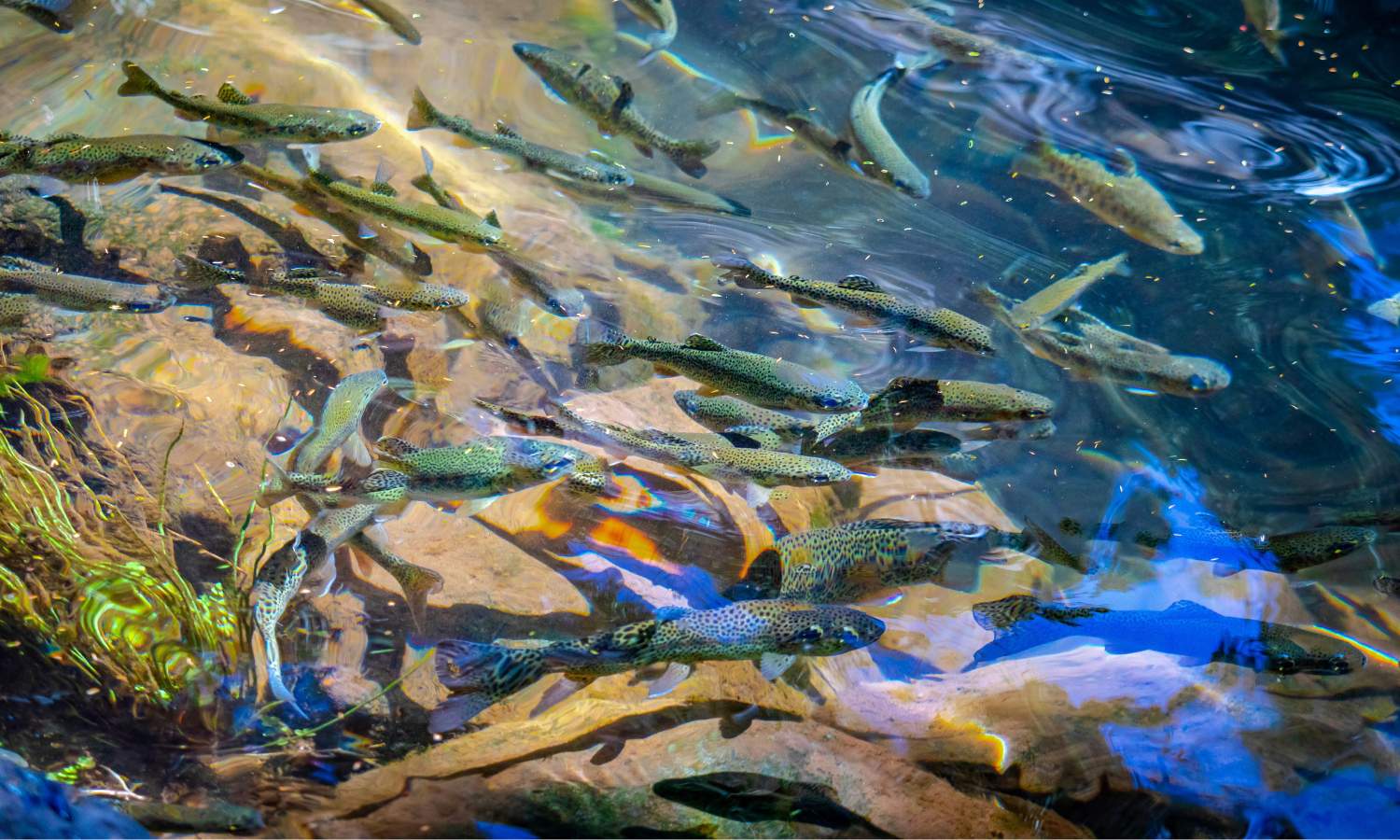
A new WWF-led report is calling on governments to implement an emergency recovery plan to address the decline of freshwater fish populations across Africa, warning of severe consequences for food and nutrition security. Titled Africa’s Forgotten Fishes, the report celebrates the variety of fish species across the continent and highlights the role they play in maintaining the health of freshwater ecosystems.
Africa’s freshwater ecosystems—including rivers, lakes, and wetlands—are home to at least 3,281 known fish species, according to the report. At least 3 million tons of fish are caught in Africa annually, sustaining over 3 million jobs and the highest per capita freshwater fish consumption globally.
Despite their ecological and economic importance, WWF reports that freshwater species are “in freefall,” with global populations down 85 percent since 1970. In Africa, at least 26 percent of freshwater fish species are threatened—and the report suggest that the actual figure may be significantly higher due to lack of data. These declines threaten not just biodiversity, the report finds, but also the food systems, livelihoods, and cultural traditions of millions across the continent.
“When these fish disappear, we lose much more than species: we lose food and nutrition security, livelihoods and ecosystem balance,” says WWF Africa Freshwater Lead Eric Oyare. Yet freshwater fish remain undervalued and overlooked by decision makers.
WWF’s proposed Emergency Recovery Plan outlines six priorities for action including improving water quality, protecting habitats and species, and ending unsustainable management. The urges African nations to adopt the plan as part of broader efforts to meet biodiversity and sustainable development goals.
Companies Are Falling Short on Regenerative Agriculture Programs
A new report from As You Sow grades 20 major food suppliers and manufacturers on the quality of their regenerative agriculture programs. The report aims to establish standards for measuring regenerative success, and sheds light on the extent to which major food companies are implementing effective programs.
On the basis of 15 key performance indicators related to regenerative agriculture goals, progress, and transparency, the report finds that most major food companies are failing to implement program components that are necessary for achieving regenerative outcomes.
A majority of companies have not adopted clear, outcome-based definitions of regenerative agriculture, and 14 of the 20 are not collecting field-level data from suppliers. McCain Foods received the highest score, earning a B grade, followed by Lamb Weston and PepsiCo. The industry average grade is a D.
As You Sow warns that labeling programs reliant on synthetic inputs as regenerative misleads stakeholders and invites greenwashing claims. It calls on policymakers to fund regenerative transitions and on consumers to support certified regenerative products.
And it urges companies to set quantitative targets, use reliable soil measurement tools, and provide stronger support for farmers. Food companies have the power to regenerate healthy soil and food – a win for farmers, consumers, investors, and the environment,” says Cailin Dendas, lead report author and As You Sow’s environmental health sr. coordinator.
Syria Wildfires Devastate Crops Amid Drought and Conflict
Some of Syria’s worst wildfires in years have been brought under control, according to the Civil Defense and the Ministry of Emergency and Disaster Management. The fires, which burned for over a week across forested and agricultural lands, destroyed over 14,000 hectares.
Rugged terrain, limited water access, fuel shortages, and unexploded ordnance from years of conflict severely hindered containment efforts, UNICEF reports. The U.N. Food and Agriculture Organization (FAO) estimates that up to three quarters of Syria’s wheat crop — enough to feed 16.3 million people for the year — may be lost as a result of the fires and a severe drought.
Rural livelihoods, especially in farming and herding, have been severely impacted. With roughly 70 percent of the affected population relying on agriculture, most systems are currently inoperable. FAO is urging immediate support to restore food production and prevent irreversible livelihood loss.
U.S. Tariffs on Mexican Tomatoes Expected to Raise Food Prices
The Trump-Vance Administration imposed a 17 percent tariff on most fresh tomato imports from Mexico, ending a long-standing trade agreement that had previously suspended such duties. The decision, announced by the Department of Commerce, stems from a decades-old anti-dumping case in which Mexican growers were found to be selling tomatoes below market value in the U.S.
About 70 percent of fresh tomatoes consumed in the U.S. are imported from Mexico, and experts warn the new duty could push prices higher for consumers and restaurants. “Even a few cents adds up, especially for low-income households,” says David Ortega, an economist at Michigan State University.
The U.S. tomato industry, particularly in Florida, supports the measure as protection against unfair trade practices. But critics—including the Fresh Produce Association of the Americas—warn of reduced selection and higher costs. Mexican officials deny the dumping allegations and say it is “impossible to substitute Mexican tomatoes” given the volume exported.
Articles like the one you just read are made possible through the generosity of Food Tank members. Can we please count on you to be part of our growing movement? Become a member today by clicking here.
Photo courtesy of Mark Huigen, Unsplash