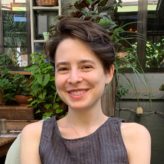
This October, the World Food Prize Foundation will formally award Dr. Mariangela Hungria as the recipient of the 2025 World Food Prize. Hungria is being honored her work on work on nitrogen fixation, soil health, and crop nutrition.
Hungria, a researcher with the Brazilian Agricultural Research Corporation (EMBRAPA), is credited with helping Brazil become an agricultural powerhouse. But her methods weren’t always widely embraced.
The World Food Prize laureate attended school in the 1970s, a time when when crop yields were seeing dramatic increases as a result of the Green Revolution, characterized by the heavy use of fertilizers and pesticides. But Hungria was interested in microorganisms, and she believed they offered a solution that didn’t require farmers to rely so heavily on synthetic chemicals. She called it a micro green revolution.
The pushback that Hungria received from her teachers and peers was significant. “Everybody said that I had no future with biologicals,” she tells Food Tank. But Hungria persisted. In her research, she proved that it was possible for farmers to apply less fertilizer, thereby cutting greenhouse gas emissions, while also improving their yields and livelihoods.
And through her career, farmers remained central to her work, Hungria says. “Every research that I did, it was because a farmer came to me to talk about something. It was because a farmer came [to me] or I met a farmer in the field, and he told me what he wanted and what was happening, and that gave me ideas to do my work.”
Read more about Mariangela Hungria’s work in a new piece on Forbes, and watch or listen to a conversation with the World Food Prize laureate on a new episode of “Food Talk with Dani Nierenberg.”
Articles like the one you just read are made possible through the generosity of Food Tank members. Can we please count on you to be part of our growing movement? Become a member today by clicking here.
Photo courtesy of Lucas Friederich, Wikimedia Commons